Local · Homeowners
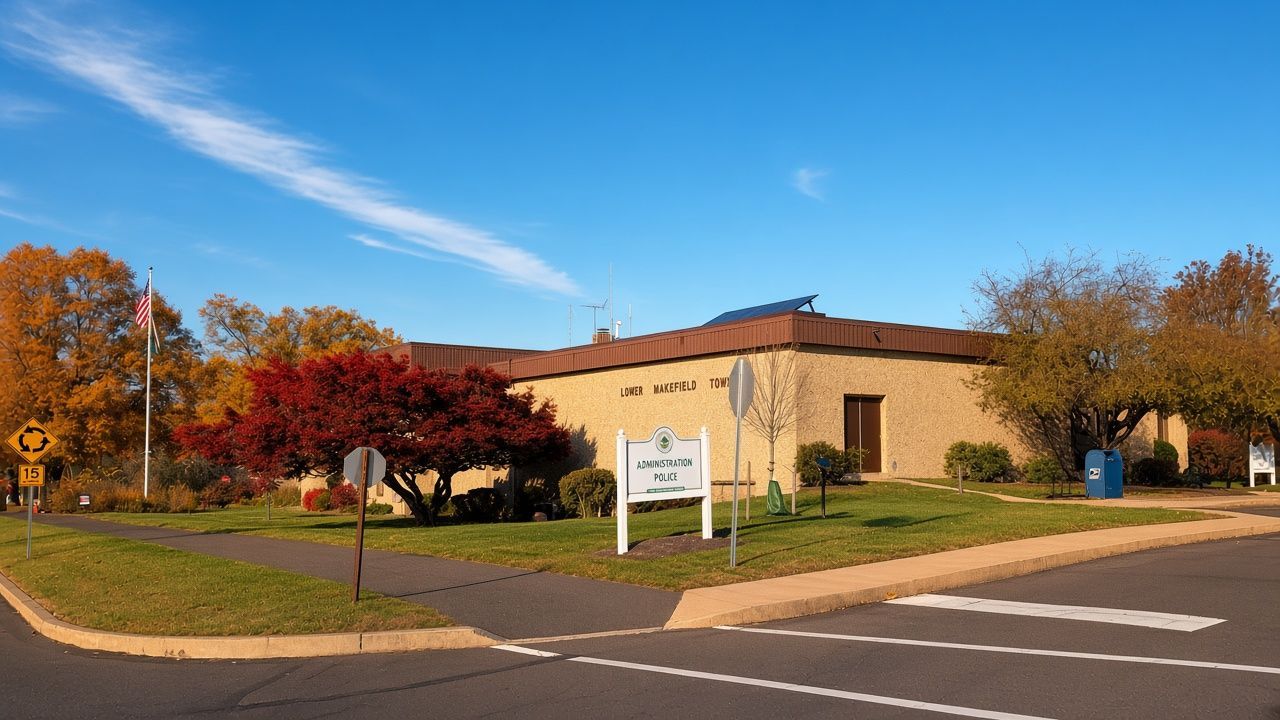
TLDR: Lower Makefield dropped the earned income tax and is now proposing a township property tax increase of about 32%, roughly $346 a year on the average assessment. My honest opinion: it's real money, but it's the township's slice of your bill, and it shouldn't change anyone's mind about living in Lower Makefield.
A 32% tax increase is the kind of headline that stops people in their tracks. If you own, buy or sell in Lower Makefield, here's what's actually on the table, what it costs a typical homeowner, and what I'd do about it.
First, the most important part: nothing is final. On Nov. 18 the Board of Supervisors voted to advertise a budget, not adopt one, and the Bucks County Herald reports the final vote is set for Dec. 18. Everything below comes from the township's own budget documents and local reporting.
01. What did Lower Makefield actually propose?
At the Nov. 18 meeting, the supervisors tabled the proposed 1% earned income tax, the wage tax that had packed the room. They then voted to advertise a 2027 budget built on higher property taxes instead.
The draft the township presented on Nov. 3 already raised total township millage by 4.937 mills, from 24.993 to 29.930. Most of that comes from lifting the general purpose rate from 13.88 mills to 19, the legal maximum. Late in the meeting, according to the Herald, the board added another 3 mills to the parks and recreation levy, to be transferred to the general fund to pay for police coverage of the parks.
Put together, that's an increase of almost 8 mills, which is where the roughly 32% figure comes from.
02. How much would it cost the average homeowner?
A mill is $1 of tax for every $1,000 of assessed value. Bucks County assessments still use a 1972 base year, which is why the assessed value on your bill looks so much lower than what your home would sell for.
The township's average residential assessment is $43,600, so each mill costs that homeowner $43.60 a year. Under the Nov. 3 draft, the increase was $215.25. With the extra 3 mills, the Herald reports it's now estimated at $346.05 a year.
To estimate your own number, take the assessed value from your tax bill, divide by 1,000, and multiply by about 7.94. A home assessed at $60,000, for example, would pay roughly $476 more.
Here's the context I always give my clients. On the township's own tax page, the township portion is 24.95 mills out of a total of 256.403 mills once you add the county and Pennsbury School District. The 32% is the township's slice of your bill, not your whole bill. By my math, almost 8 more mills adds about 3% to the total at those rates. That doesn't make $346 nothing. It just keeps it in proportion.
The 32% is the township's slice of your bill, not your whole bill.
03. Why does this need a judge's approval?
Lower Makefield is a second class township. Under the Second Class Township Code, Section 3205(a)(1), the board can levy up to 14 mills for general purposes on its own. The township sits at 13.88 mills, so it has 0.12 mills of room left.
To go higher, the board has to petition the Bucks County Court of Common Pleas, which may allow up to 5 more mills, to a maximum of 19. There's no voter referendum. Per the township's fact sheet, the solicitor files a petition laying out the deficit, the court holds a hearing where officials can testify, and the judge can grant the full 5 mills, a smaller amount, or nothing. The supervisors authorized the petition by a 4-1 vote on Oct. 21.
This isn't new territory. Township resolutions show Lower Makefield levied above the 14-mill cap from at least 1986 through 2004.
04. Why does the township need the money?
The township describes a structural deficit: its recurring revenue hasn't kept up with recurring costs. The draft budget projects a 2027 general fund gap of about $4.37 million, roughly 8.1 mills. The October workshop showed that, without new revenue, the gap keeps growing to about $7.75 million by 2030.
General fund spending is projected to rise from $18.95 million in 2026 to $21.16 million in 2027. The 2027 capital plan totals $22.26 million, including $7.0 million for road paving, and the township says much of it is deferred maintenance.
The fact sheet notes that 19 mills alone would still leave about $1.6 million of the 2027 gap. Supervisor John Lewis said the parks and recreation move would stabilize finances until 2029. One honest gap: the Herald reports the plan didn't add money for fire services, even after the Yardley-Makefield Volunteer Fire Department's president raised concerns about a shortage of volunteers.
05. Why was the earned income tax dropped?
The earned income tax would have been 1% of wages and business profits, not Social Security, most pensions or investment income. The township budgeted $20 million from it for 2027 and showed versions that paired it with cutting the general purpose rate by up to 5 mills and ending the $10 per capita tax.
For the median Lower Makefield household income of $175,206, the township's CFO estimated the EIT at $1,514 to $1,752 a year, depending on how much property tax relief came with it. Residents filled the Oct. 7 meeting to object, and on Nov. 18 a full room waited 75 minutes to comment, only to learn the board had tabled it.
The trade-off is real either way. A wage tax falls on people who earn a paycheck, including renters. A property tax falls on every owner, including retirees on fixed incomes. Next door, Yardley Borough adopted a 1% EIT this fall, and the Herald reports Lower Makefield will be the only Pennsbury municipality without one next year. Not every supervisor liked the late switch: one called it a "switcharooni."
06. What does this mean if you're selling in Lower Makefield?
Buyers and their lenders look at the full monthly payment, and taxes are part of it. On the average assessment, $346.05 a year is about $29 a month. It won't decide whether someone chooses Lower Makefield, but it shows up in their math.
I always tell my sellers to put the real numbers on the table early. Share your current tax bill, and know that a buyer's agent may ask about the proposed increase. What hurts a sale isn't a tax increase. It's a surprise at the closing table.
What hurts a sale isn't a tax increase. It's a surprise at the closing table.
Pricing still comes from comparable sales, not the township budget. If you're listing this winter or spring, I'd price off what's actually selling in your neighborhood.
07. What should buyers budget for, and can you appeal your assessment?
If you're buying, your lender will usually estimate escrow from the current tax bill. If the increase passes, your first escrow review can show a shortage and a higher payment, so ask your lender to budget at the proposed rate. The township and county bill goes out each March 1, the school bill each July 1.
Also confirm the municipality. A Yardley mailing address can be in Lower Makefield Township or in Yardley Borough, which taxes separately and now has its own EIT.
As for appeals, you appeal your assessment, not the tax rate, through the Bucks County Board of Assessment Appeals. The 2026 annual deadline was Aug. 3, with a $75 fee per parcel, and the county hasn't posted the next one. An appeal only makes sense if your assessment is out of line with similar homes. I'm happy to pull comparable sales, and for the filing itself, talk to a real estate attorney or tax professional.
08. How can Lower Makefield residents weigh in before the final vote?
The proposed budget has to be advertised and available for public inspection for 20 days before it's adopted, and it must be adopted by Dec. 31. The Herald reports the budget vote is set for 7:30 p.m. Dec. 18 at the township building, 1100 Edgewood Road. The township calendar also lists a regular Board of Supervisors meeting on Dec. 2 at 7:30 p.m.
- Read the documents. The draft budgets and fact sheets are on lmt.org under Finance, Budget Reports. The township manager told the Herald an updated budget will be posted before the vote.
- Comment in person or by phone. Board agendas list a call-in number for public comment.
- Watch live. Meetings air on Comcast channel 22 and Verizon channel 2120, and stream on the township's YouTube and Facebook pages.
- Email the township. Questions go to admin@lmt.org.
Where I Stand on This
I'm not here to tell anyone how to vote or which tax is better. That's for residents and the board. My job is to help you understand what it means for your home.
After more than 20 years doing this, here's what I know: Lower Makefield is still Lower Makefield. It's still Pennsbury schools, the parks and the preserved open space. In my experience, a few hundred dollars a year rarely decides whether someone buys here. Knowing your number, and planning for it, is what keeps you in control.
Questions About Your Taxes and Your Home?
If you're wondering what the proposed increase means for your sale, your purchase or your monthly payment, call me and I'll walk through your numbers with you.
215.431.0884 hj@heatherjackman.comFrequently Asked Questions
How much will Lower Makefield property taxes go up in 2027?
Under the budget advertised on Nov. 18, 2026, township taxes on the average residential assessment of $43,600 would rise by about $346.05 a year. That's almost 8 more mills, about a 32% increase in the township portion. The final rate depends on the Dec. 18 vote and court approval.
Why does Lower Makefield need court approval to raise taxes?
Pennsylvania's Second Class Township Code caps the general purpose tax at 14 mills unless the Court of Common Pleas approves more. Lower Makefield is at 13.88 mills, so going to 19 mills requires a petition to the Bucks County court. No voter referendum is required.
Did Lower Makefield pass an earned income tax?
No. On Nov. 18, 2026, the supervisors tabled the proposed 1% earned income tax and shifted to a property tax increase instead. Yardley Borough, next door, adopted a 1% EIT this fall.
Is the 32% increase on my whole property tax bill?
No. The 32% applies to the township portion only. The township's tax page shows township millage of 24.95 out of 256.403 total mills once the county and Pennsbury School District are included, so the effect on the full bill is much smaller.
How do I calculate my own Lower Makefield tax increase?
Take the assessed value on your tax bill, divide by 1,000, and multiply by about 7.94 mills. A $43,600 assessment comes to about $346 a year. The final number depends on the rates the board adopts.
Can I appeal my property assessment in Bucks County?
Yes. Annual appeals go to the Bucks County Board of Assessment Appeals. The 2026 deadline was Aug. 3, 2026, with a $75 fee per parcel, and the next deadline hasn't been posted. I'd talk to a real estate attorney or tax professional before filing.